Showing posts with label a life less plastic. Show all posts

Sunday, 22 May 2011

Like Minded People

Isn't it lovely to meet people who are thinking about the same things as you are? Despite the prevalence of 'green' today, it's actually been a while since I really met anyone I could have a proper discussion with about the environment. I love my family and friends, absolutely, but 95% of them are hardened consumers. So: thank you Cape Farewell and Shortcourse/UK for introducing me to like-minded thinkers.

When I was invited to apply for Shortcourse/UK (see post below), I really wasn't sure what to expect. The launch evening, held at Newlyn Gallery, and with presentations by Sion Parkinson, Daro Montag and Nick Edwards, was intersting, but - to my mind - decidedly 'arty'. Now don't get me wrong, I'm all for arty stuff, I just find a lot of it to be beyond my understanding (or out of my zone of thinking, I guess), which means that I find it difficult to appreciate. But Shortcourse/UK sounded like such an interesting and unusual opportunity, I thought I'd apply for it anyway - and boy am I glad I did.

The truth of the matter is that firstly, despite being a writer (or attempting to be one, anyway), I've never thought of myself as an artist; and secondly, I found it hard to see how artists could really make a difference to environmental issues. I enjoyed the first two expeditions with Shortcourse/UK, but coming home each evening I wasn't really sure if I'd learnt anything or gained anything. This weekend, however, was the third and final expedition, a two day trip to the Isles of Scilly, and it rather feels as if everything has now clicked into place.

The beauty of Cape Farewell is that it brings together scientists and artists, enabling the cross pollination of thoughts. It changes artists' thinking by more concisely introducing the science behing environmental concerns, and it changes scientists' thinking by introducing the art and the beauty and - essentially - the naturalness of the environments around us. I think that without my even really being aware of it, being surrounded by artists for the last two days has got me thinking in a distinctly more 'arty' way. And where two months ago I would have been somewhat sceptical about this, today I feel really excited about it and I'm really, really hoping I can hold onto this feeling.
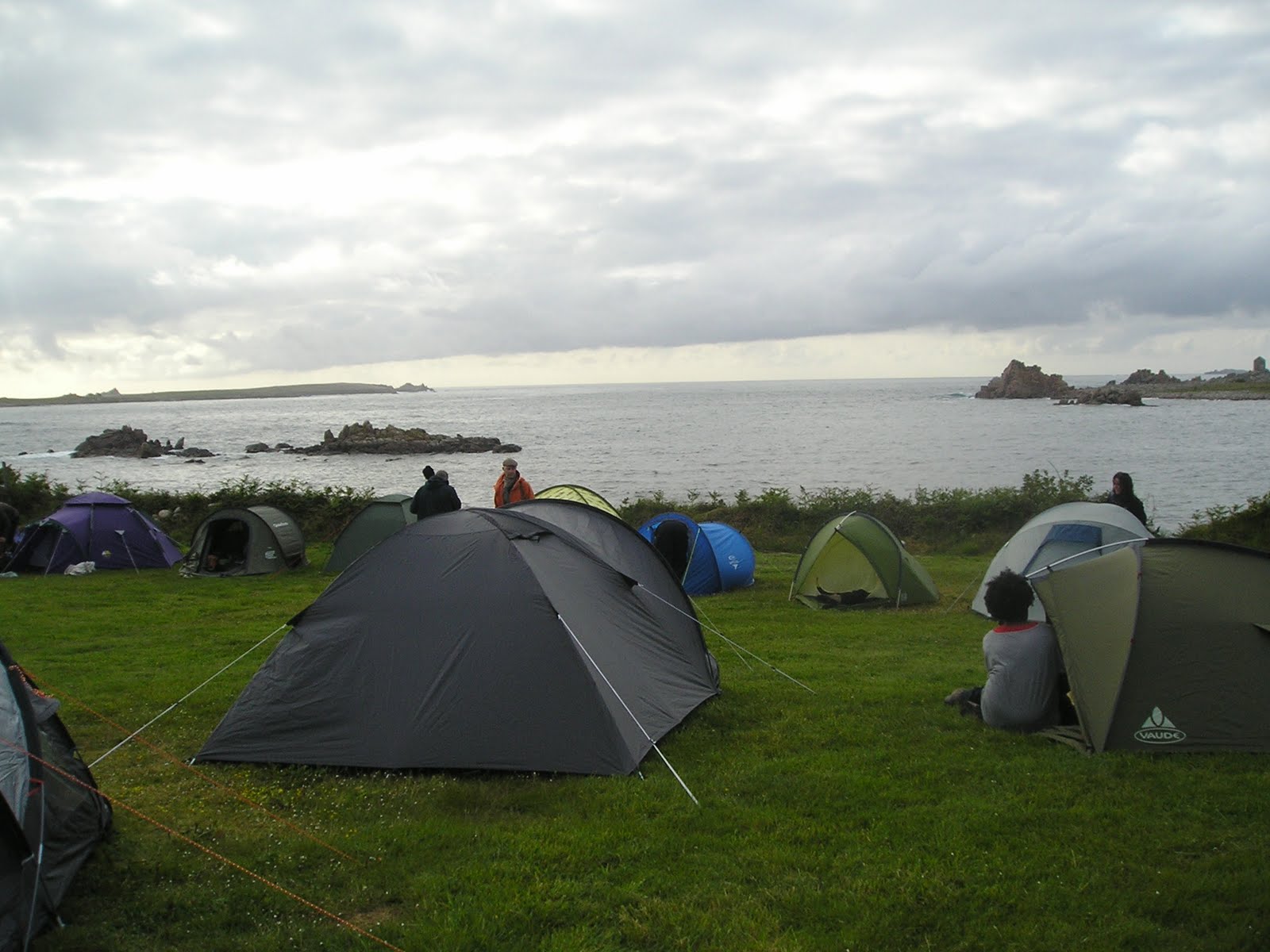
So what was so special about the Isles of Scilly expedition? Other than the Scillies being a pretty special place, it was immersion in the truest sense - immersion in the group of people I travelled with, immersion in the thinking and ideals of this group and its leaders, Sion and Daro, and immersion in the natural environment. After sleeping under canvas, right next to the sea, in a place with no light pollution, who wouldn't be thinking differently?

And as far as art and the environment goes, one of the best parts of the experience was listening to the presentations that the other students gave on their work, and discovering not only how art does communicate, but also how we're all like minded people. From Bryony, who is mid-way though a year rejecting consumerism, to Sonia's obsession with the sea, whales and plastic pollution, to Tom's research into the history of a field, generating some truly beautiful nature writing; Rob's investigation of ocean acidity, and Saffron, who is creating her own food range that highlights the absurdity of modern society's food attitudes. Each of them (and everyones else inthe group too) demonstrates that art and science do not have to be exclusive subjects. And I'm really looking forward to working with them more.


A bit of plastic here and there, but I couldn't find any nurdles (a good thing!). I imagine that the Islanders keepa close hold on the quality of their beaches. Interestingly, it seemed as if there was more glass than plastic around the beaches, though what that means, if anything, I don't know.

Sunday, 27 March 2011

A Life Less Plastic

Reading the email from my tutor made my heart sink and my frustration levels rise.

January 2011 and the deadline for the final submission for my MA is looming. The email tells me I have to hand in two hard copies of my final project, properly bound.

So what's the problem? Over the last two years I've gotten away with handing my coursework in simply tied together with interesting pieces of ribbon, but something tells me that's just not going to cut it this time around. Properly bound is all well and good, but it usually means a plastic binding comb to keep all the pages together, coupled with acetate covers. Which seems rather hypocritical given that my final project is all about quitting plastic.

There are always ways around these little problems though (well, nearly always; I still haven't solved half the problems I've got when it comes to plastic food packaging, but hey, that's a different story). A quick email to KallKwik revealed that they can bind manuscripts using a metal comb if I want, rather than a plastic one. For a few extra pennies, of course.

Well, I thought, that's a start. So when I finally got all my pages together I toddled down there - and then convinced them to not use the acetate covers. Instead, the very helpful lady photocopied my title page onto a piece of card to act as the front cover instead of using the ubiquitous plastic. Although I think she thought I was a little odd. Why wouldn't I want a nice shiney acetate cover?

And now I've finally gotten around to updating my website, where you can read the introduction to my project, A Life Less Plastic. Next stage in my grand plan to conquer the world: win over an agent and start writing chapter six.

Sunday, 22 August 2010

But what does 'Plastic' mean?

I have been thinking about what the word plastic has come to mean within our society. In the research I’ve been doing for the book I’m trying to write about plastic, I keep coming across one particular quote.

‘I want to say one word to you; just one word,’ says Mr. McGuire to Benjamin Braddock in the iconic 1967 movie, The Graduate.
‘Yes, sir,’ replies Dustin Hoffman’s character, Benjamin.
‘Are you listening?’
‘Yes, I am.’
‘Plastics,’ says Mr McGuire.
‘Exactly how do you mean?’
‘There’s a great future in plastics. Think about it. Will you think about it?’

In the 1960’s plastic was just coming into its own. It was the way forward, the chosen material of the space age. Despite being mid-Cold War, the 50’s and 60’s are generally regarded as being optimistic and forward-looking decades, and – with the launch of post-war economy-boosting plans to get everyone buying, buying, buying – decades of material affluence. ‘The optimism of life in those decades was accompanied by a ‘throw-away’ approach to material goods, a short-term relationship between people and their possessions,’ writes Penny Sparke in The Genius of Design. And this is very much epitomised by the now famous article in Life magazine, ‘Throwaway Living: disposable items cut down household chores’. Plastic was the future, the ‘stuff of dreams’ (Penny Sparke).

So when did this change? I’ve started asking people what they think of when they hear the word ‘plastic’ – people who aren’t aware of my particular dislike of plastic, and people who I know aren’t particularly eco-warrior-esque, as I figured they wouldn’t have too many pre-existing ideas about the environmental connotations of plastic. Here are some of the responses I’ve had so far:

‘Barbie. Fragile, brittle.’
‘Lego, cheap, oil, chemicals, bags.’
‘Cheap and nasty!’
‘False. Cheap and nasty, cosmetic surgery etc…’

Hmmm, not too flattering, I must say. Cheap is true – after all, the cheapness of the material is one of the reasons why it’s become so ubiquitous. And nasty – perhaps nasty because plastic doesn’t age well, it flakes, it becomes brittle. And maybe nasty because it’s cheap. Even though many people seek to buy the cheaper things, being cheap is still an insult. As plastic products flooded the post-war market, quantity took over from quality as plastic was substituted for other longer-lasting and more expensive materials such as steel and ceramics. ‘Cheaper, lower quality plastic products had entered the civilian marketplace,’ writes Penny Sparke. ‘Doubts began to emerge about the materials’ relationship with good design; consumers began to be anxious that they were being sold ‘vulgar’ or tasteless goods, and disenchantment set in.’

But – and this is one of the most interesting things for me – this idea of plastic as cheap and nasty, and representative of bad taste, has led the word to take on a whole different meaning. ‘In the sixties, you could always insult a guy by calling him ‘plastic,’’ Elizabeth Royte tells her readers in Garbage Land. ‘The word became a kind of shorthand for a suburban life of conspicuous consumption and upward striving.’ Plastic people, plastic culture – it’s become synonymous with fleeting, throwaway ideas, with being shallow and worthless. Everybody understands this, and this concept has fully insinuated itself within society and language.

And yet the use of plastic has risen and risen, and is now the most produced material in the world, millions of tonnes of it every single year. If everybody hates it and looks down their noses at it, how did this happen? Five minutes after I asked a lady at work what she thought of plastic – to which her response was, ‘I don’t like it’ – she’s tucking into her plastic-sealed lunch. Is it because plastic as a material was just so innovative we couldn’t help but be tempted by it and what it could offer us? The more I think about it, the more I realise that humans are short-term thinkers. We look for easy solutions, the quick fix, the lazy option. Plastic has provided this for us in ways that were probably never even imagined a hundred or a hundred and fifty years ago. How could we say no once it was there?

Let’s face it, plastic revolutionised the way I live. It made things affordable to people who could never have afforded such things if they weren’t made of plastic, and who am I to say they shouldn’t be allowed to have them if they want them? Who am I to tell someone they can’t strive for a better lifestyle? And as long as people were buying plastic – despite the increasingly negative thoughts being attached to it – companies continued to make it.

And so here we are.

Penny Sparke’s book, The Genius of Design, was produced to coincide with a recent BBC2 series of the same name. It was a five part series looking at all sorts of different aspects of design, including a whole episode dedicated to plastic (‘Better Living through Chemistry’), which was incredibly fascinating. Unfortunately, the episode doesn’t seem to be available to watch online at the moment, but the whole series can be bought on DVD – ironic, given as DVD’s are a typical example of how plastic has shaped modern living.

Wednesday, 17 February 2010

Babies!

My best friend, B, just had her first baby. A beautiful little girl with a shock of dark hair weighing in at a nice seven pounds plus. It’s very exciting. Well, it’s exciting for me – as a young woman of certain breeding age that is surrounded by friends and colleagues having babies left, right, and centre. Literally.

What does B having a baby mean? Presents! Off I toddled to Mothercare in search of that perfect gift. Boy was I disappointed. Plastic, plastic, plastic. I swear practically everything in that shop was covered in plastic or had some sort of plastic accoutrement attached to it. Why would I want to surround a delicate newborn child with this nasty and often toxic substance?

It’s no secret in my household that, to Bron’s increasing terror, I’m getting a bit broody. And it makes me wonder, what on earth am I going to do when/if I am lucky enough to have a baby one day? Can you get baby bottles that aren’t plastic? What did mothers used to do? Just breastfeed until the babies were weaned? What about babies that had trouble breastfeeding? Did they just have to struggle on without? Maybe these questions are terribly naïve, I don’t know. Maybe I’ll have to research the child rearing methods of South American rainforest tribes, find out how they do it. I don’t think I’ll suggest this to B, though – after a 60 hour labour she might just keel over in shock.

Meanwhile, thank goodness for the local businesses that survive in my local town. There are two wonderful children’s shops full of a more traditional style of toy and mother’s goodies, Laurie’s Toybox and Mums and Little Ones. After considerable deliberation I chose a beautiful, soft rabbit-come-snuggle-blanket for baby E, made by Moulin Roty. No plastic labels, no plastic packaging, just a lovely chunky cardboard presentation box. I hope both B and E like it; I quite fancy one for myself.

Tuesday, 19 January 2010

Addicted to Plastic

I have just found this amazing documentary called Addicted to Plastic, about a chap who realises he is - like the rest of us - addicted to plastic. The documentary is the culmination of his three year journey around the world looking at all things plastic and their impact.

You can see a quick trailer on YouTube, or watch the whole kaboodle online for free, care of The Documentary Log.

Or you can read an interview with the man himself, Ian Connancher at PSFK.

Go and make a cup of tea (black to avoid the plastic milk bottle), select that foil-wrapped choclate bar from your cupboard, settle down, and watch it now!